

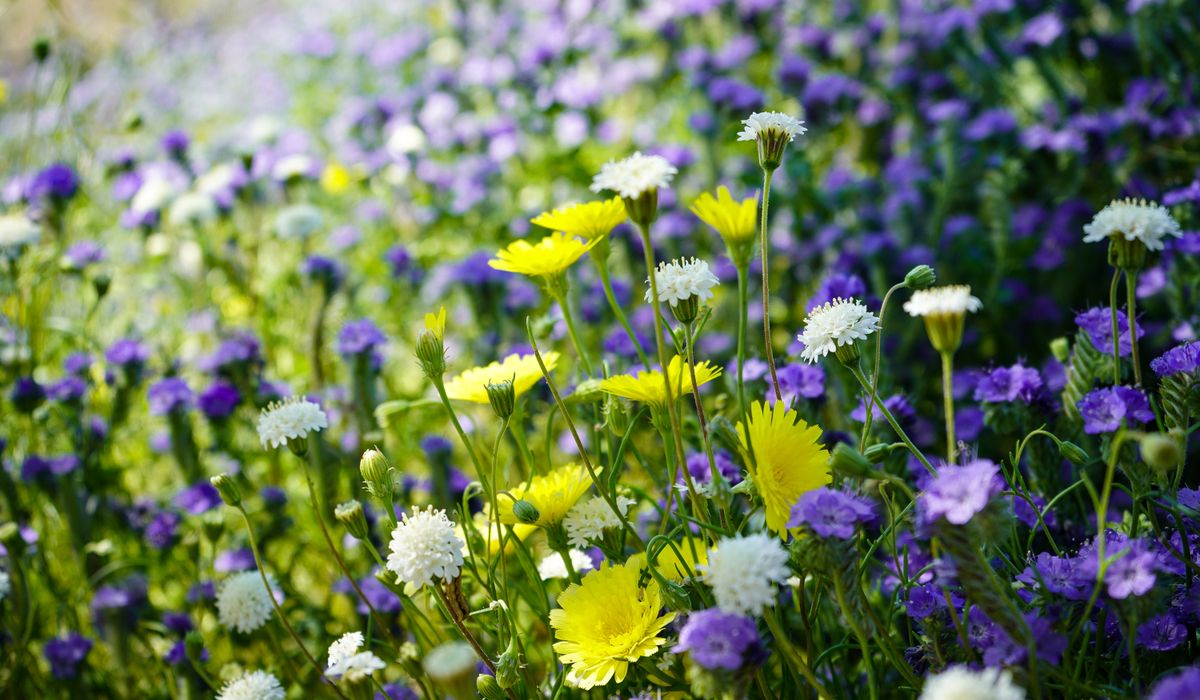
Why a wildflower corner earns its keep
A scruffy corner behind the shed, the strip along a south-facing fence, or that awkward patch where the lawn refuses to thicken — these are the places where a wildflower meadow makes the most sense. You are not trying to recreate a hay meadow in miniature, and you certainly are not aiming for the tidy, staked perfection of a herbaceous border. What you are doing is giving native plants a chance to do what they evolved to do, and in return they will feed bees, hoverflies, butterflies and moths from late spring right through to the first frosts.
The key to success is unglamorous: it is all in the preparation and the mowing regime. Get those two right and a wildflower patch will look after itself far better than any border you have ever planted. Get them wrong and you will grow a magnificent crop of thistles, docks and rank grass, which is not the same thing at all.
Start by being cruel to the soil
Wildflowers are, almost without exception, plants of poor ground. Give them rich, fertile soil and the grasses will romp away, smothering everything else within a season. So the first job is to reduce fertility, not increase it.
Choose a patch of at least two square metres — smaller than that and the edges take over. Strip off the top layer of turf if you have it, or skim away the top 5–10cm of soil and stack it somewhere out of the way. If you are converting rough grass, cut it very short and rake off every clipping.
- Do not add compost, manure or fertiliser. Not a handful, not a bucket. Fertility is the enemy here.
- Do not dig in a rich topsoil. If anything, mix in a little sharp sand or fine grit to open up heavy clay.
- Leave the ground to settle for three or four weeks before sowing, and hoe off any weed seedlings that appear. This is your one chance to deal with perennial weeds cheaply.
- Remove existing weed roots thoroughly — couch grass, ground elder and bindweed will all out-compete your wildflowers and are almost impossible to remove later.
Choosing the right seed for your spot
Buy a native wildflower seed mix suited to your soil type and your region. There are broadly three useful categories: a general meadow mix for medium soils, a clay-soil mix, and a chalk or limestone mix for thin, lime-rich ground. If your patch is heavily shaded, be honest about it — most meadow species need six hours of sun a day, and shade mixtures are a compromise at best.
A typical native mix will include ox-eye daisy, knapweed, yarrow, birdsfoot trefoil, selfheal, red clover, salad burnet, meadow buttercup and yellow rattle. That last one deserves special mention. Yellow rattle is a partial parasite on grass roots, and it is the single most useful plant in a new meadow because it weakens the grasses and lets the flowers through. If your mix does not contain it, buy it separately and sow it in autumn.
Annual-only mixes, often sold as "cornfield annuals", give a glorious first year of poppies and cornflowers but usually fade away by the second. They are fine for a quick fix, but if you want a perennial meadow, sow a perennial mix and be patient.
Sowing thinly and evenly
Wildflower seed is expensive, and the temptation is to sow thickly. Resist it. A rate of about 1.5 to 2 grams per square metre for a wildflower-only mix, or 3 to 5 grams per square metre for a grass-and-flower mix, is plenty. Too dense and the seedlings compete with each other and you get weak, spindly plants.
Mix the seed with dry sand, or with fine, sterile compost, at roughly ten parts bulking agent to one part seed. This makes it far easier to see where you have been and to spread it evenly. Sow in two passes at right angles to each other.
- Autumn sowing — late August to mid-October — suits most perennial mixes and gives natural stratification over winter.
- Spring sowing — March to mid-May — works on lighter soils but usually needs watering if the weather turns dry.
- Tread the seed in gently with a board or the flat of a rake. Do not bury it; light helps germination in many species.
- Water only if it stays dry for a fortnight after spring sowing. Autumn sowings rarely need it.
The mowing regime that makes or breaks it
This is where most wildflower patches fail. A meadow is not an unmown lawn. It is a grassland with a specific cutting pattern, and that pattern is what keeps the flowers in charge.
In the first year, cut the whole patch to about 7cm in early autumn once the flowers have set seed, and remove every clipping. The following year, the routine settles down: leave the patch uncut from spring until late July or August, then cut once, hard, to around 5–7cm, and clear the cuttings. A second cut in late September or October is worth doing on fertile ground.
Always remove the cuttings. Leaving them to rot feeds the soil and undoes all your hard work at the start. A hay rake and a tarpaulin make this a twenty-minute job rather than a chore.
If you want a longer flowering season, cut half the patch in July and leave the other half until September. This staggered approach suits invertebrates beautifully, giving them continuous habitat rather than a single sudden loss.
What to expect, year by year
The first year will look thin and slightly disappointing. Annual weeds will arrive, and you should pull or hoe the worst of them. The second year is usually the turning point, with ox-eye daisies and buttercups beginning to knit together. By year three, if the soil is poor and the mowing is right, you should see a genuine, self-sustaining community of flowers and fine grasses.
Let a few seed heads stand through winter for the birds, and leave the cut stems slightly longer at the edges for overwintering insects. A wildflower corner is not maintenance-free, but it asks for very little: a cut in late summer, a rake, and the discipline to leave it alone the rest of the time. In return, it will hum all summer.


Coding is used in almost all aspects of life and work now, be it directly or indirectly. It’s not just for companies in the tech sector. “An increasing number of businesses rely on computer code,
Coding is used in almost all aspects of life and work now, be it directly or indirectly. It’s not just for companies in the tech sector. “An increasing number of businesses rely on computer code,
Coding is used in almost all aspects of life and work now, be it directly or indirectly. It’s not just for companies in the tech sector. “An increasing number of businesses rely on computer code,